Industrial Intelligence for Smarter Buildings
The AI diagnosis architecture
CARACTERÍSTICASDual-layered neural processing separating physical anomaly detection from strategic user classification.

detectPatterns ()
Lower-level temporal analysis of physical sensor streams. Detects thermodynamic drift, frozen sensors, sustained humidity and window-open candidates before they manifest as failures.
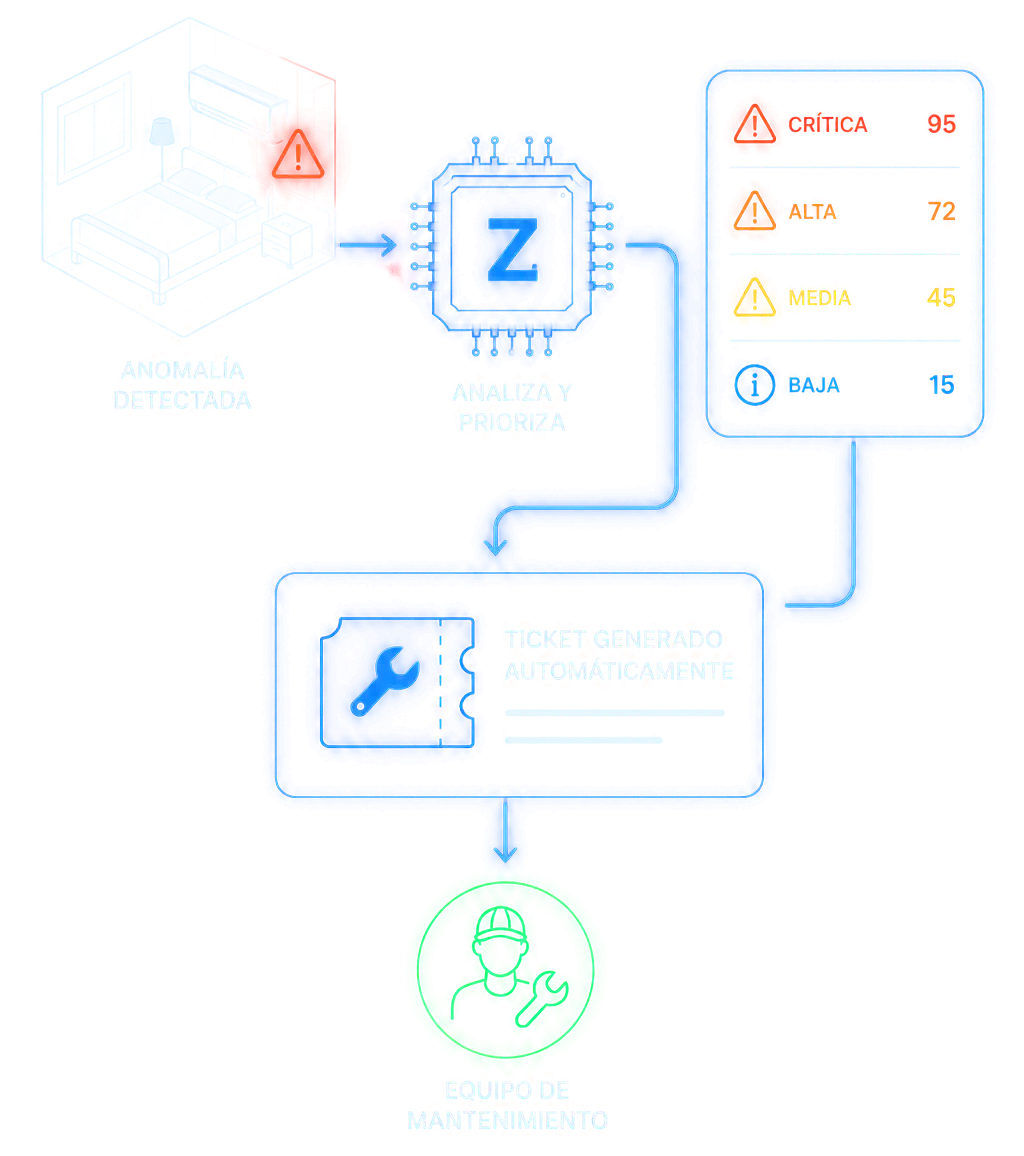
Automatic Ticket Generation
CARACTERÍSTICASDeep inference scores based on multidimensional sensor correlation.
Zitia transforms the patterns detected by the diagnostic engine into maintenance tickets automatically. When a room shows a thermal drift, a frozen sensor, sustained humidity or a valve problem, the system classifies the issue, assigns a severity, and creates a ticket ready for the maintenance team.
Alerts are defined from the physical evidence observed in the room, not from static rules. Recurrent problems are grouped, critical alerts are prioritized, and the ticket includes the room, the likely cause and the context needed to act quickly.
Digital Twin
CARACTERÍSTICASZitia builds a live thermal representation of the building using orientation, climate, occupancy, spatial distribution and real-time HVAC telemetry.
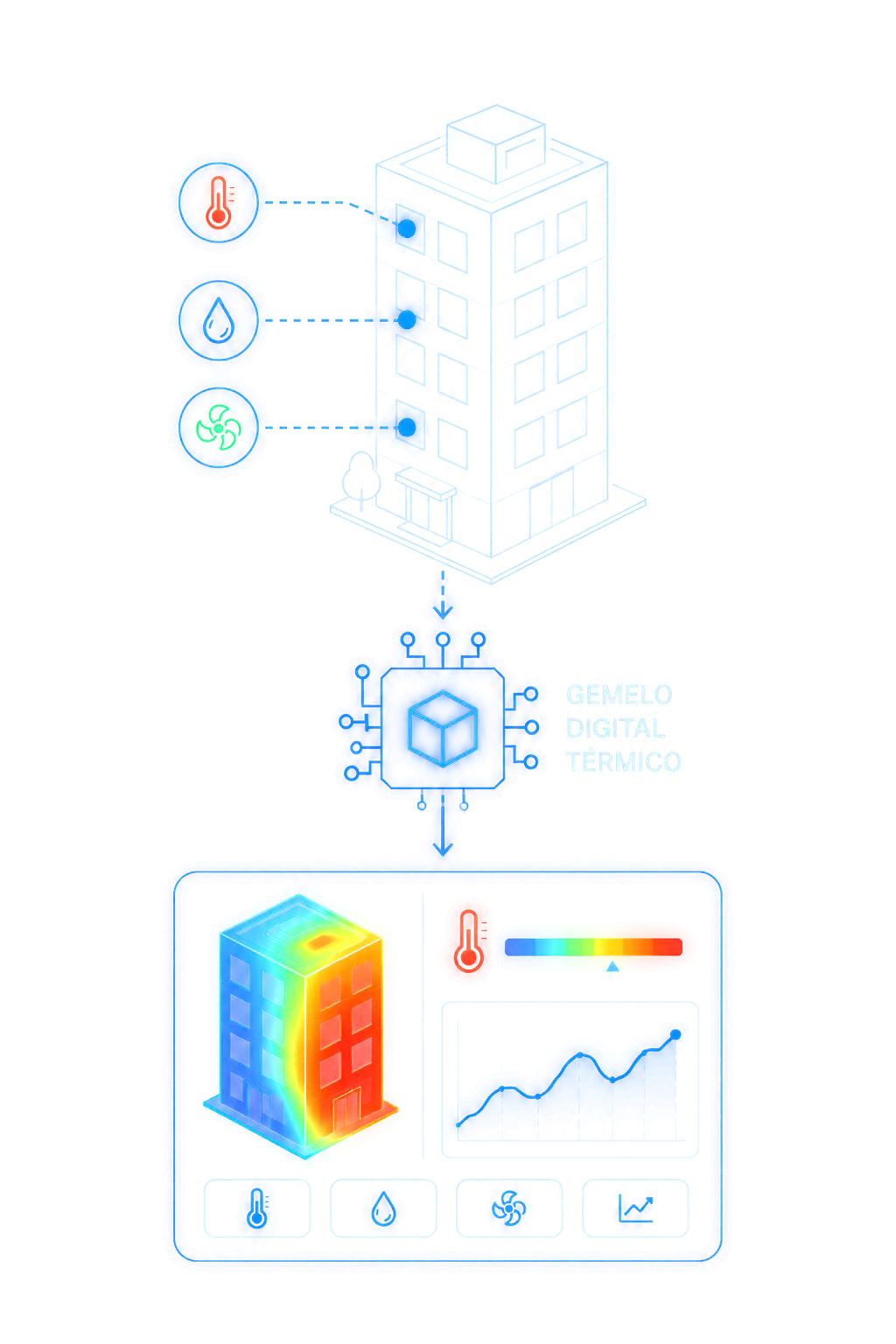
The system correlates facades, floors, HVAC zones, solar radiation and historical thermal behavior to understand how comfort evolves within the building. This enables detecting thermal propagation, inefficient zones and energy losses before they become operationally visible.
The thermal twin converts the building into an observable and simulable system, capable of anticipating operational and energy impact.
Smart HVAC Scheduler
CARACTERÍSTICASZitia uses PMS occupancy, climate, orientation and HVAC capacity to decide when each room should be conditioned before guest arrival.
The system avoids cooling empty rooms, leverages optimal thermal windows and reduces consumption without compromising comfort. Rooms are prepared only when necessary and with appropriate intensity.
The result is a dynamic and adaptive HVAC operation aligned with the hotel's actual occupancy.

Anomaly Correlation
CARACTERÍSTICASZitia analyzes simultaneous patterns between rooms, floors and HVAC zones to detect structural problems that cannot be identified by observing individual rooms.
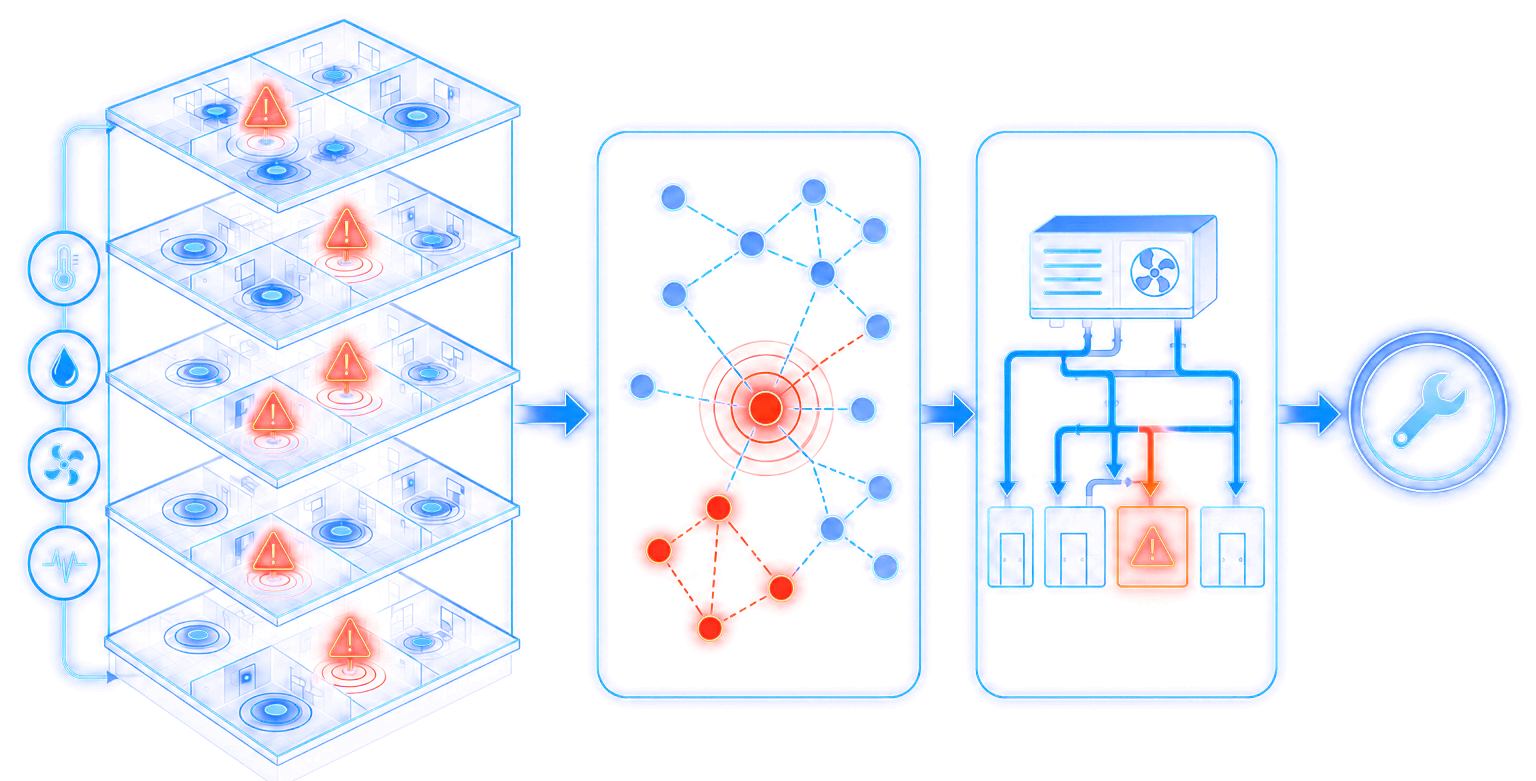
correlatePatterns ()
When multiple rooms show thermal degradation, efficiency loss or synchronized anomalous behavior, the system identifies possible hydraulic, production or energy distribution problems.
Operational Priority Engine
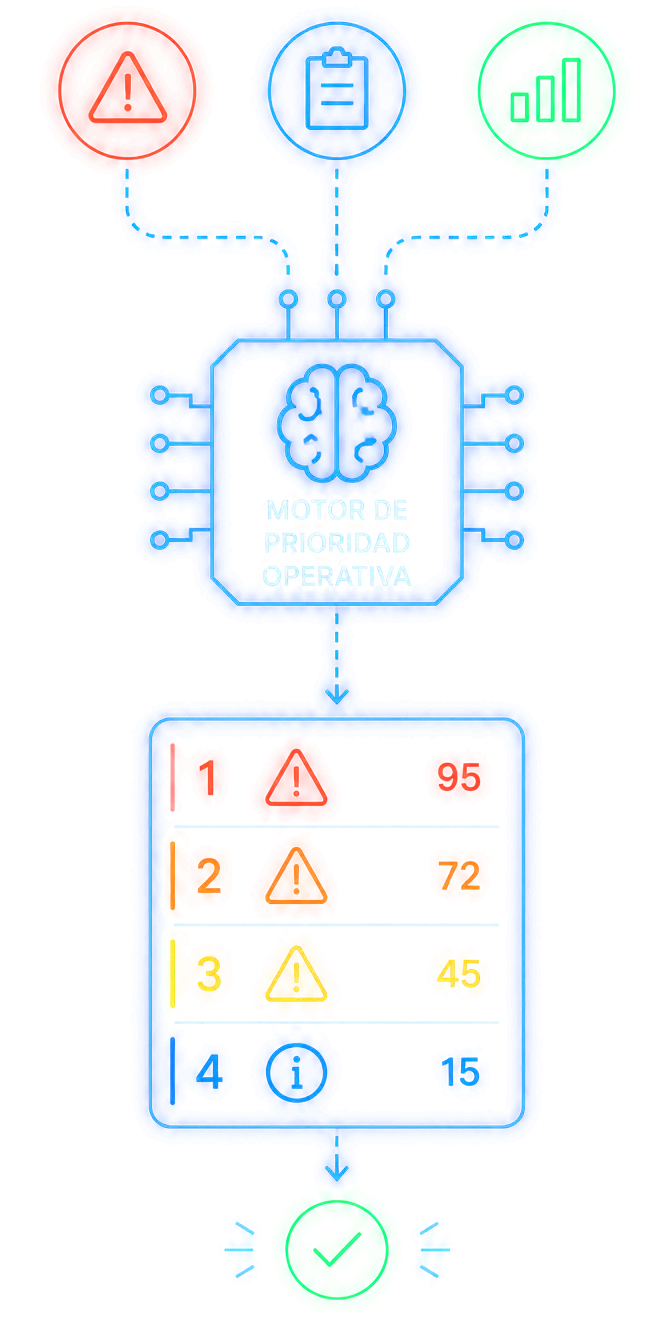
CARACTERÍSTICASNot all anomalies have the same impact. Zitia calculates operational priority combining comfort, occupancy, criticality, failure risk and guest context.
The system understands which rooms require immediate intervention and which can be monitored without operational impact. A minor anomaly in an empty room is not treated the same as progressive degradation in an occupied suite.
This allows maintenance to focus first where there is actual economic or reputational risk.
Energy Efficiency Model
CARACTERÍSTICASZitia estimates the real energy cost per room and detects which areas of the building are consuming more energy than necessary.

estimateEnergyCost ()
The system correlates temperature, occupancy, HVAC efficiency, time to comfort and thermal behavior to estimate energy losses and inefficient rooms.
Operational Simulation
CARACTERÍSTICASZitia allows simulating operational scenarios before applying them to the real building.
The platform can estimate the impact of shutting down cooling on a floor, modifying setpoints, applying savings modes or changing HVAC capacities, showing which rooms will lose comfort first and what the expected energy savings will be.
This enables making operational decisions based on prediction and not only on reaction.

Operational Conversational AI
CARACTERÍSTICASZitia incorporates a conversational layer designed for maintenance and technical operations.

queryBuildingState ()
The system answers questions about rooms, anomalies, comfort, tickets, HVAC zones and thermal behavior using real-time building data.
Integración Técnica
ZitIA se integra con la infraestructura técnica real del edificio para transformar datos de instalaciones HVAC, sensórica y automatización en inteligencia operativa accionable.
La plataforma no se limita a visualizar información: conecta directamente con el ecosistema técnico del inmueble para supervisar, analizar y optimizar el comportamiento del edificio en tiempo real.
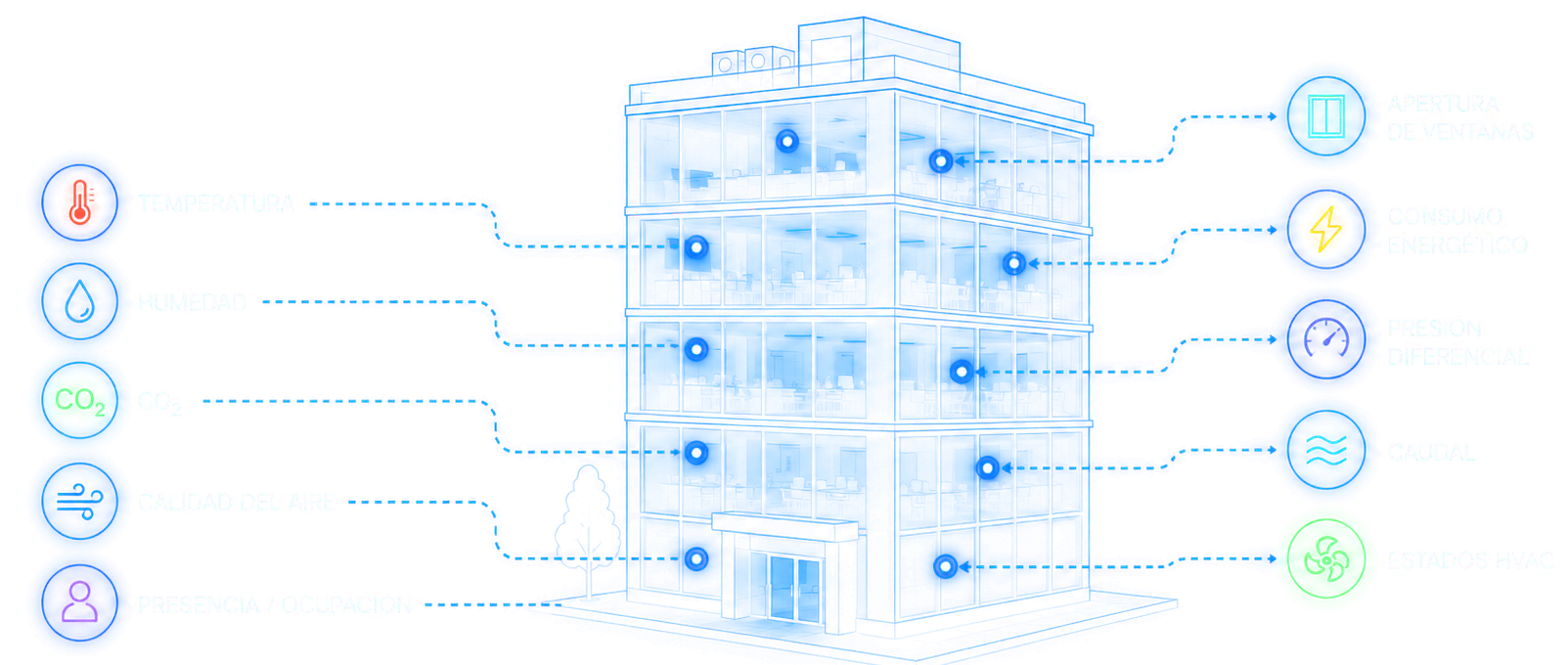
Sensórica
ZitIA puede integrarse con múltiples tipos de sensores distribuidos por el edificio:
La plataforma unifica la telemetría en una única capa operacional para análisis, alertas y automatización.
Integración KNX
KNX Association
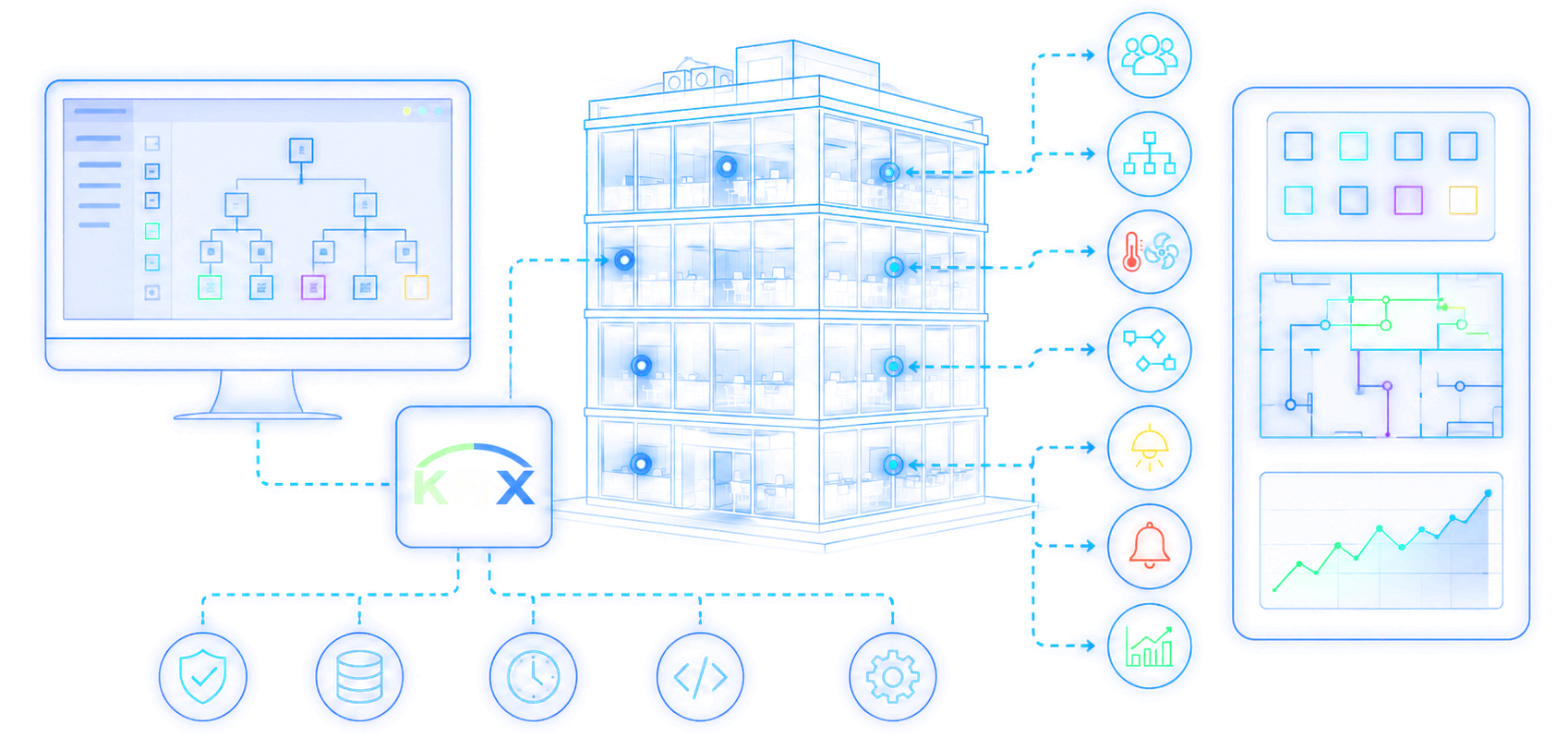
ZitIA puede conectarse directamente a instalaciones KNX ya existentes o participar en nuevos despliegues KNX desde fase de proyecto.
Capacidades:
La integración permite convertir la automatización KNX tradicional en una plataforma inteligente orientada a operación y mantenimiento predictivo.
Integración Modbus
Modbus Organization
ZitIA soporta integración mediante:
Compatible con:
Esto permite conectar tanto equipamiento moderno como instalaciones legacy.
Gateways y comunicaciones
ZitIA puede trabajar con diferentes capas de integración física e industrial:
La arquitectura se adapta a cada edificio y a las limitaciones reales de la instalación existente.
Cableado e instalación física
La integración no termina en software. ZitIA contempla:
La plataforma está diseñada para convivir con instalaciones reales, incluso cuando existen diferentes generaciones de equipamiento dentro del mismo edificio.
Cuadros eléctricos y automatización
Integración con:
ZitIA puede recoger estados técnicos y convertirlos en eventos operacionales útiles para mantenimiento y explotación.
Programación KNX
ZitIA puede integrarse con proyectos ETS existentes o participar en nuevas programaciones KNX.
Incluye:
La programación se diseña pensando no solo en automatización, sino también en observabilidad y análisis posterior.
Integración BMS
ZitIA puede convivir e integrarse con sistemas BMS existentes.
Capacidades:
Esto permite modernizar instalaciones sin necesidad de reemplazar completamente el sistema de gestión actual.
Puesta en marcha y commissioning
La puesta en marcha incluye:
ZitIA incorpora herramientas de diagnóstico que ayudan a detectar problemas de configuración, sensores congelados, mappings incorrectos o equipos sin respuesta.
Calibración y validación operacional
La calidad del análisis depende de la calidad del dato. Por ello, ZitIA contempla:
El objetivo es garantizar que la plataforma represente correctamente el comportamiento real del edificio.
Arquitectura flexible
Cada edificio es distinto. ZitIA puede desplegarse en:
Adaptándose tanto a edificios nuevos como a infraestructuras ya existentes.
Precio
Planes adaptados a cada tipo de edificio y operación.
| Característica | Essential | Predictive | Enterprise |
|---|---|---|---|
| Pensado para | Hoteles pequeños y medianos | Hoteles, residencias y edificios con operación intensiva | Cadenas hoteleras, hospitales y multi-site |
| Tamaño recomendado | Hasta 80 habitaciones / espacios | 80–400 habitaciones / espacios | 400+ habitaciones / multi-edificio |
| Monitorización en tiempo real | |||
| Dashboards operativos | Avanzados | Ejecutivos + multi-site | |
| Alertas automáticas | Básicas | Inteligentes | Priorización avanzada |
| Detección de anomalías HVAC | Básica | IA predictiva | IA avanzada multicapa |
| Detección de bajo rendimiento | — | ||
| Tickets automáticos | — | Avanzados + workflows | |
| Correlación entre habitaciones | — | ||
| Análisis energético | Básico | Avanzado | |
| Vista 3D operativa | — | Opcional | |
| Integración KNX / Modbus / BACnet | Opcional | ||
| Integración PMS | — | Opcional | |
| API de integración | Limitada | Completa | |
| Usuarios incluidos | 5 | 25 | Ilimitados |
| Soporte | Horario laboral | Prioritario | Dedicado |
| SLA | Standard | Premium | Enterprise |
| Onboarding técnico | Desde 3.000 € | Desde 6.000 € | Proyecto personalizado |
| Precio mensual orientativo | Desde 390 €/mes | Desde 1.490 €/mes | Proyecto personalizado |
Operational Assessment
EVALUACIÓNEstimate the operational improvement potential of your building based on its characteristics and current HVAC operation.
This estimator uses conservative heuristic models based on building typologies, HVAC incident patterns, and operational telemetry benchmarks observed across similar installations.
Estimates are indicative only and depend on actual building infrastructure, operation, and sensor coverage.